[ 01 / AI MUSIC VIDEO DIRECTION ]
HOW I KEEP AN AI MUSIC VIDEO VISUALLY CONSISTENT
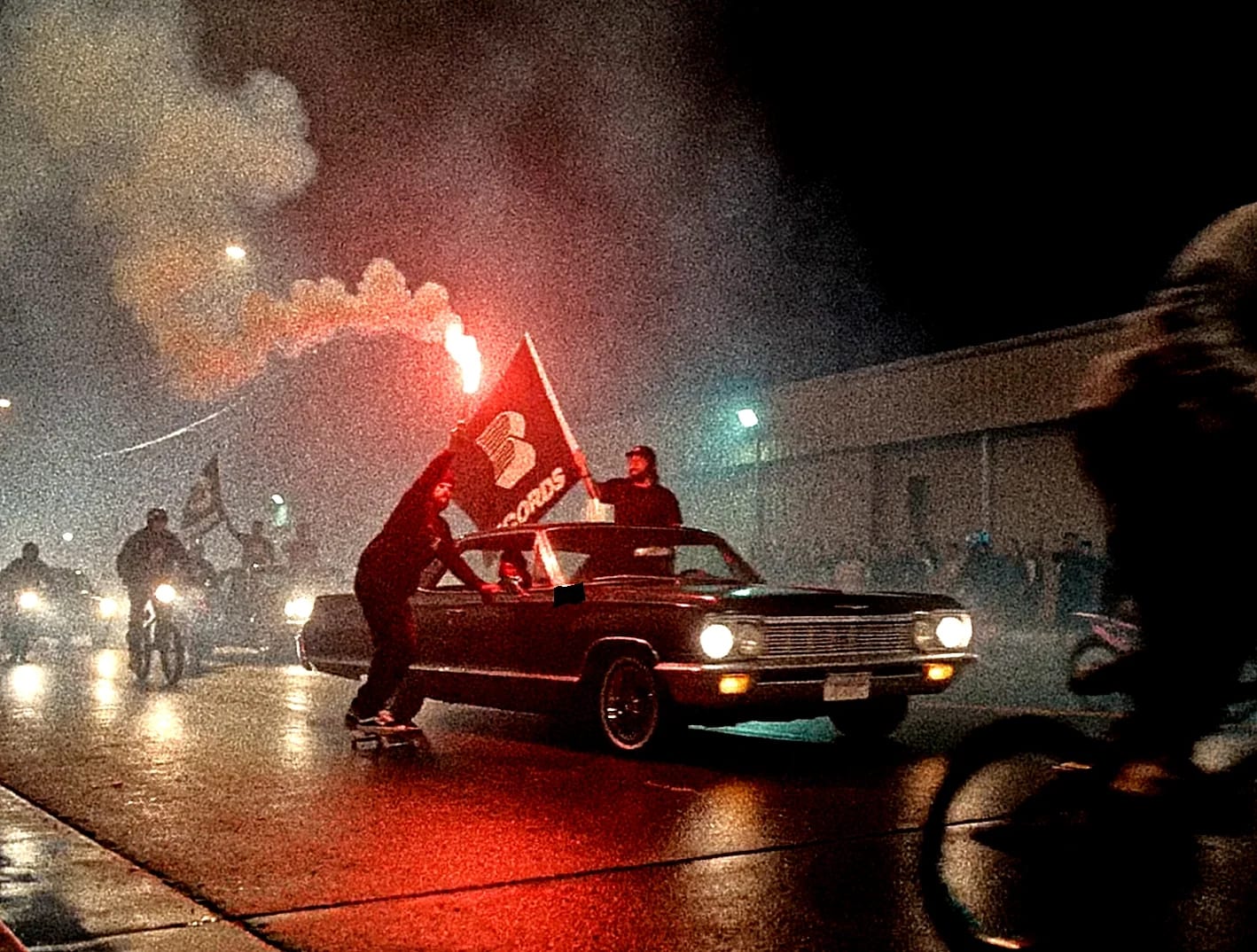
[ THE SHORT ANSWER ]
The problem is rarely generating one strong image. The hard part is making thirty or forty shots feel as if they belong to the same film. I solve that before the final edit, by deciding what the world allows and what it rejects.
I START WITH RULES, NOT PROMPTS
Before I build shots, I reduce the track to a small set of visual decisions. I define the emotional temperature, the character treatment, the locations, the camera behavior, the light and the texture. Those rules become the test for every image that follows.
A prompt can describe a frame. It cannot decide whether that frame belongs in the film. Direction makes that decision.
- Character and wardrobe anchors
- A controlled location family
- Camera distance and movement rules
- One palette with deliberate exceptions
- A fixed approach to texture and post
I BUILD SHOT FAMILIES
I do not chase unrelated hero images. I build families of shots around the same character, location or action. A wide frame, a close detail and a moving variation can then cut together because they share the same visual DNA.
This also makes revision more useful. If one scene is weak, I can improve that family without changing the identity of the whole project.
THE EDIT EXPOSES EVERY LIE
A frame can look convincing on its own and still fail as soon as it sits next to another. Scale, gaze, wardrobe, lighting direction and motion all become obvious in sequence. I review the work as an edit early, not as a folder of stills at the end.
The final pass unifies contrast, color, grain and sharpness. Post cannot rescue a world with no rules, but it can make a directed world feel complete.